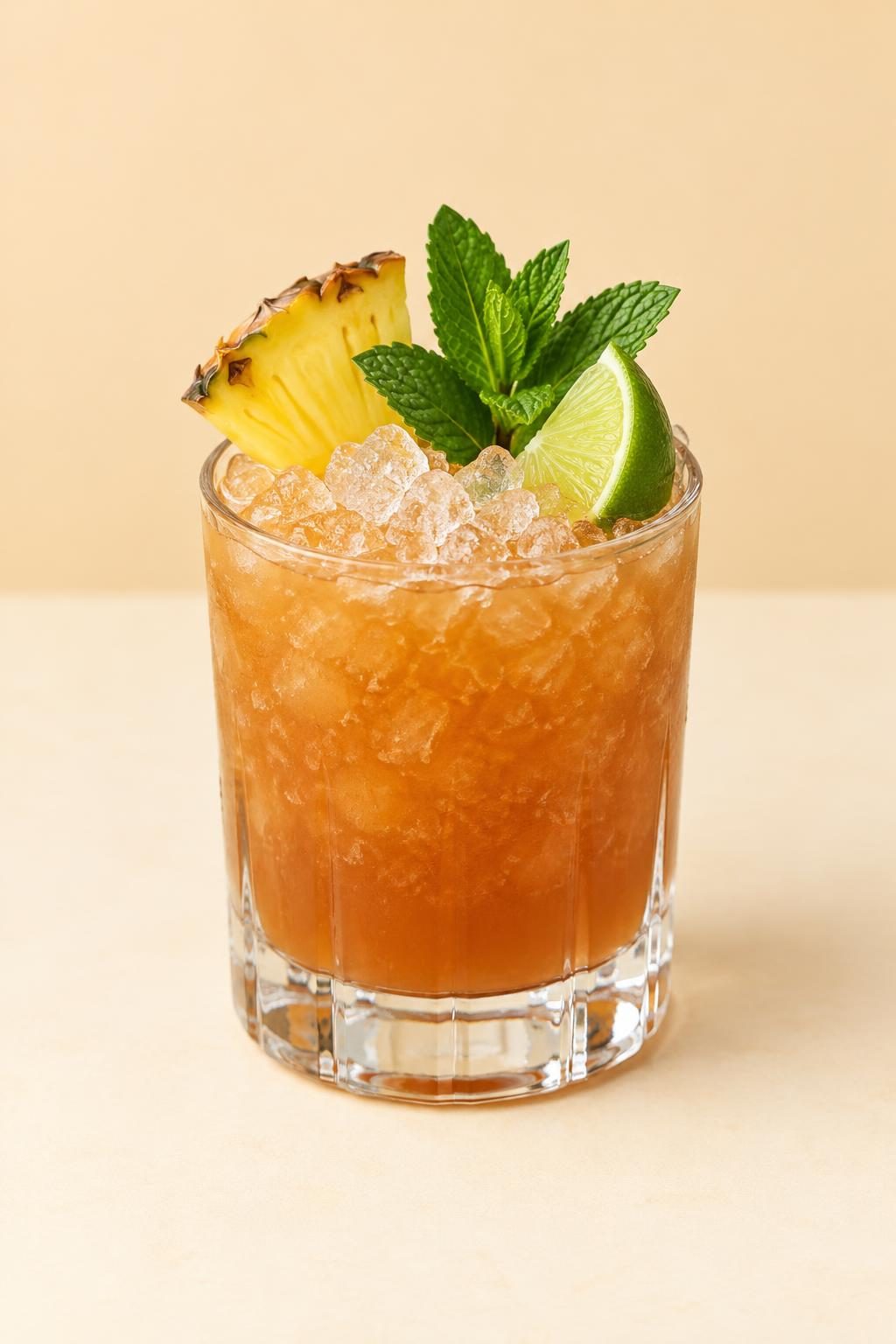
Mai Tai
Maita'i
A tiki classic of two rums, orange curaçao, orgeat and lime juice: tart, nutty and rounded, served over crushed ice.
- 18.4% ABV
- Shaken
- 3 min
- Rocks glass
- citrusy
- sweet
- rich
- IBA official cocktail · Contemporary Classics
about 1.6 standard drinks (US, 14 g of alcohol). Estimated after dilution with ice.
Ingredients
- 1 ozDark Jamaican rumJamaican pot-still rum, amber to dark in color. It gives the drink its deep, fruity character.
- 1 ozAged rumAmber molasses rum from Martinique. It is not rhum agricole, which is made from fresh sugarcane juice.
- ½ ozDry orange curaçao
- ½ ozOrgeat (almond syrup)Almond syrup, often lightly scented with orange flower water.
- ¼ ozSimple syrupJust 7.5 ml (half a tablespoon) to round out the lime.
- 1 ozFresh lime juice
Ice: Crushed ice · Garnish: pineapple, fresh mint, lime
Method
- Chill a double rocks glass or a highball glass while you mix.
- Add the Jamaican rum, Martinique molasses rum, orange curaçao, orgeat, simple syrup and fresh lime juice to a shaker filled with crushed ice.
- Shake for about 10 seconds, until the shaker is well chilled.
- Pour the whole contents of the shaker, ice included, into the glass without straining.
- Garnish with a pineapple spear, a few fresh mint leaves and a strip of lime peel.
Tips
- Use fresh lime juice and a good orgeat. Orgeat is an almond syrup, and its quality shapes the whole drink.
- Resort versions often add pineapple and orange juice or grenadine. The IBA recipe does not, and it tastes drier and more rum-driven.
- Some bars use rhum agricole in place of the molasses rum. It is a common variation that gives a grassier, more vegetal note.
Swaps
Missing something? These swaps change the taste a little but keep the drink balanced.
- Dry orange curaçao → Orange liqueur (triple sec)
- Simple syrup → Cane sugar syrup
History
The Mai Tai is often credited to Victor Bergeron, who said he created it in the 1940s at his restaurant in Oakland, California. Donn Beach also claimed to have invented it, so its origin remains disputed. The name is said to come from the Tahitian word "maita'i", meaning "good".
You may also like
Published