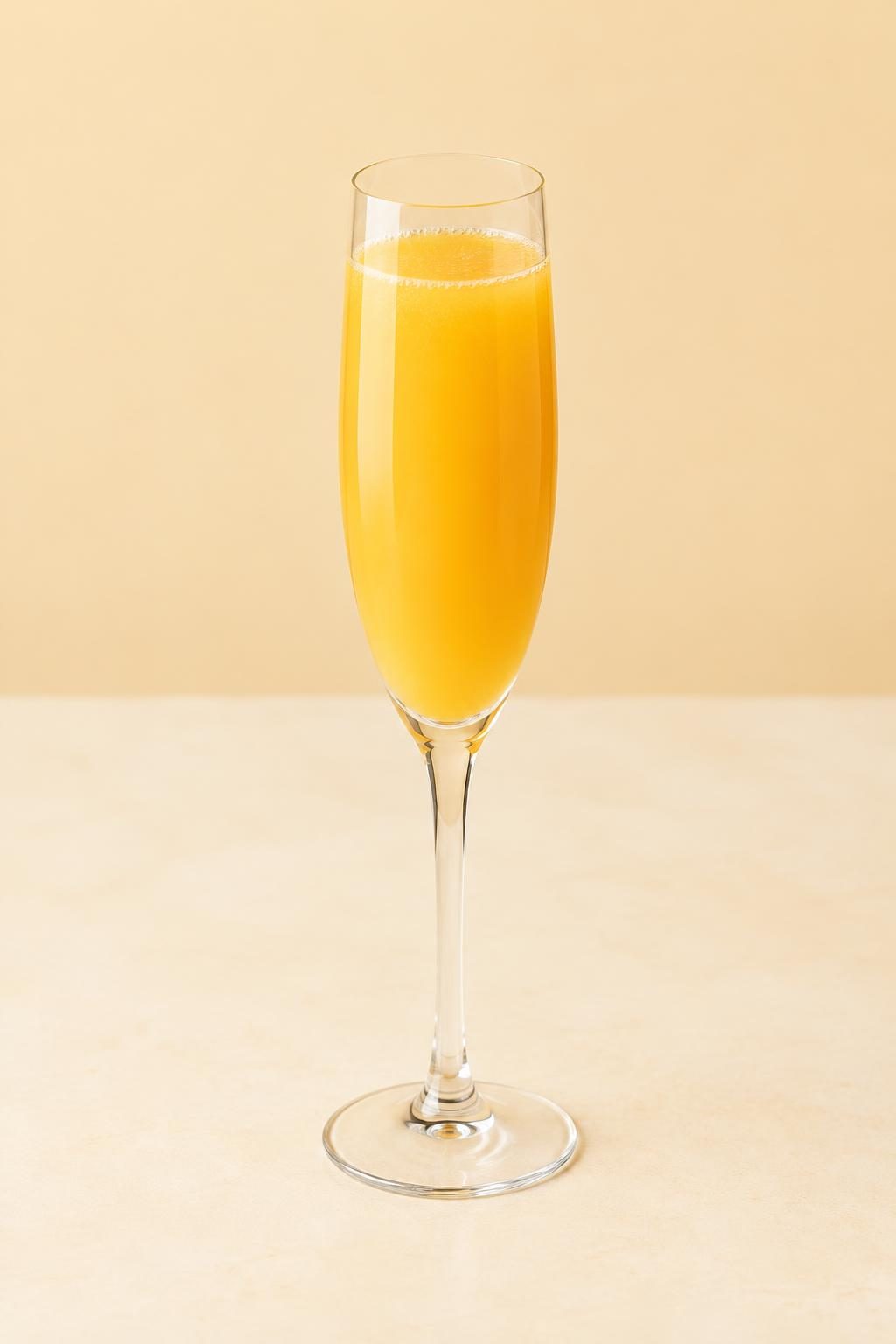
Mimosa
A light, two-ingredient mix of chilled Champagne and fresh orange juice in equal parts: fruity, crisp and gently bubbly.
- 6% ABV
- Built in the glass
- 2 min
- Flute
- fruity
- bubbly
- refreshing
- citrusy
- IBA official cocktail · Contemporary Classics
about 0.5 standard drinks (US, 14 g of alcohol). Estimated after dilution with ice.
Ingredients
- 2½ ozFresh orange juiceFresh and strained, served cold, so the drink needs no ice.
- Top up withChampagneWell chilled. A brut style balances the sweetness of the juice.
Ice: No ice
Method
- Chill a champagne flute in the freezer or fill it with ice water for a minute, then empty it.
- Pour 75 ml of fresh orange juice into the flute.
- Tilt the glass and slowly top up with 75 ml of chilled Champagne so the bubbles stay lively.
- Stir gently once or twice with a bar spoon to combine, and serve immediately, without ice.
Tips
- Chill both the Champagne and the juice beforehand. Pour the juice first, then the Champagne, and stir gently to combine.
- Use fresh, well-strained orange juice. Pulp makes the drink foam up and spill over.
- For a lighter orange note, use one part juice to two parts sparkling wine, as in a Buck's Fizz. Prosecco can replace Champagne in the same quantity for a fruitier, slightly softer result.
Swaps
Missing something? These swaps change the taste a little but keep the drink balanced.
- Champagne → Prosecco
History
The Mimosa is often credited to Paris bartender Frank Meier around 1925. Its name is usually linked to the yellow mimosa flower, whose color the drink recalls. It is a close relative of the Buck's Fizz, a London drink that uses more sparkling wine and less juice.
You may also like
Published